What Is Gynecomastia?
A complete patient guide to male breast enlargement — causes, types, grades, diagnosis and treatment options. By Dr. Ashutosh Soni, MS, MCh (Plastic Surgery), Star Hospital, Udaipur.

Did You Know?
Around 40–70% of men experience gynecomastia at some point in life. Nearly half of adolescent boys develop temporary breast enlargement during puberty. Many men suffer silently because they believe they are alone — but gynecomastia is one of the most common reasons men consult a plastic surgeon.
What Is Gynecomastia?
The word Gynecomastia is derived from the Greek words: Gyne = Woman and Mastos = Breast. Together, they mean "female-like breast development in a male."
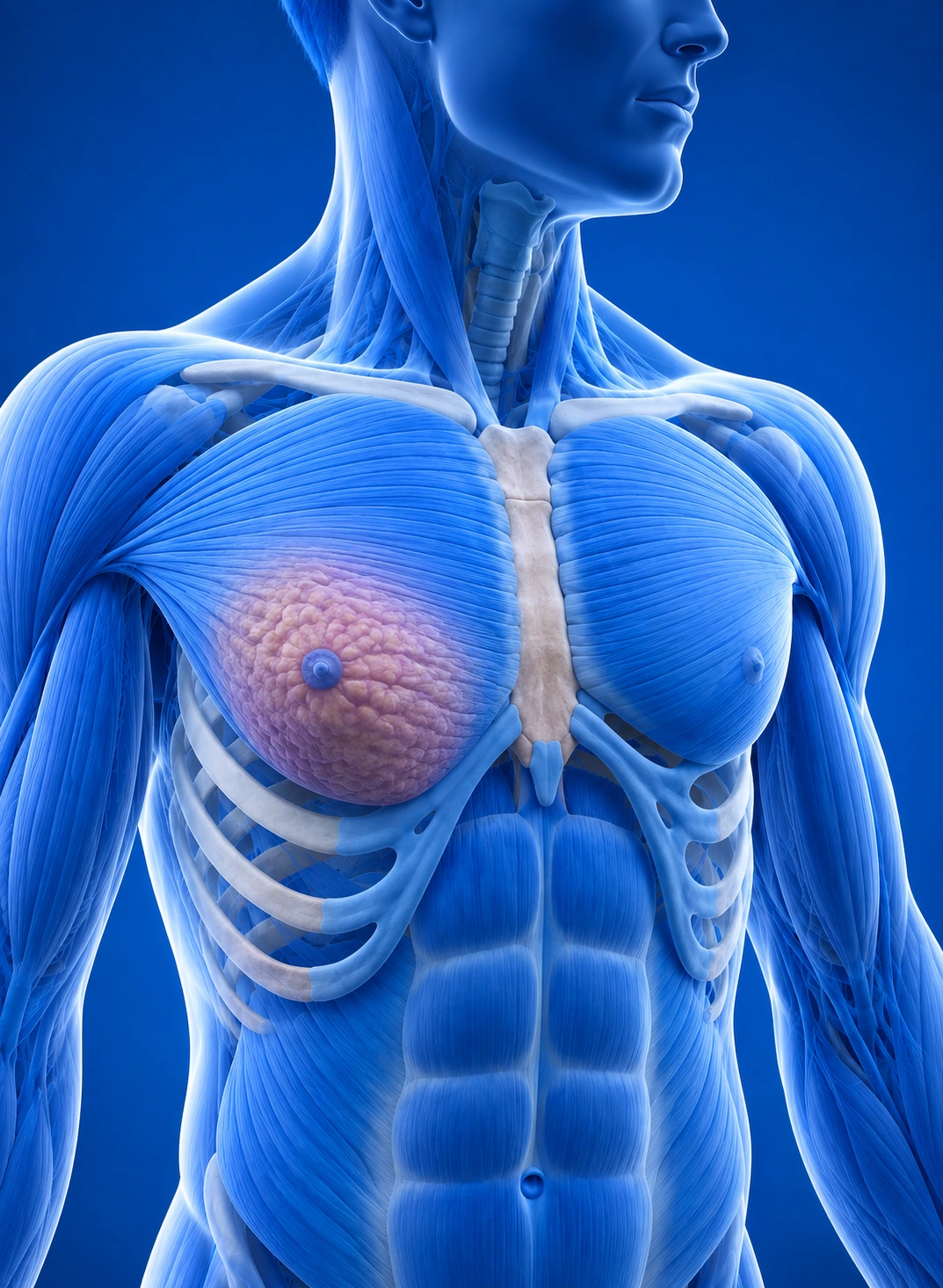
Medically, gynecomastia is defined as the benign enlargement of breast gland tissue in males. Unlike a fatty chest, true gynecomastia results from the growth of firm glandular tissue beneath the nipple, often caused by an imbalance between male and female hormones.
Gynecomastia is the enlargement of breast gland tissue in males, causing the chest to appear fuller, rounded, or feminine. It may affect one breast (unilateral) or both breasts (bilateral) and can occur at any age—from newborn babies and teenagers to adult and elderly men.
- Mild or severe
- Painful or painless
- Temporary or persistent
- One-sided or both-sided
Gynecomastia is enlargement of the breast gland — not just excess fat. This distinction is important because true glandular tissue usually does not disappear with diet or exercise alone.
Anatomy of the Male Breast
Understanding the normal anatomy of the male chest helps explain why gynecomastia develops.
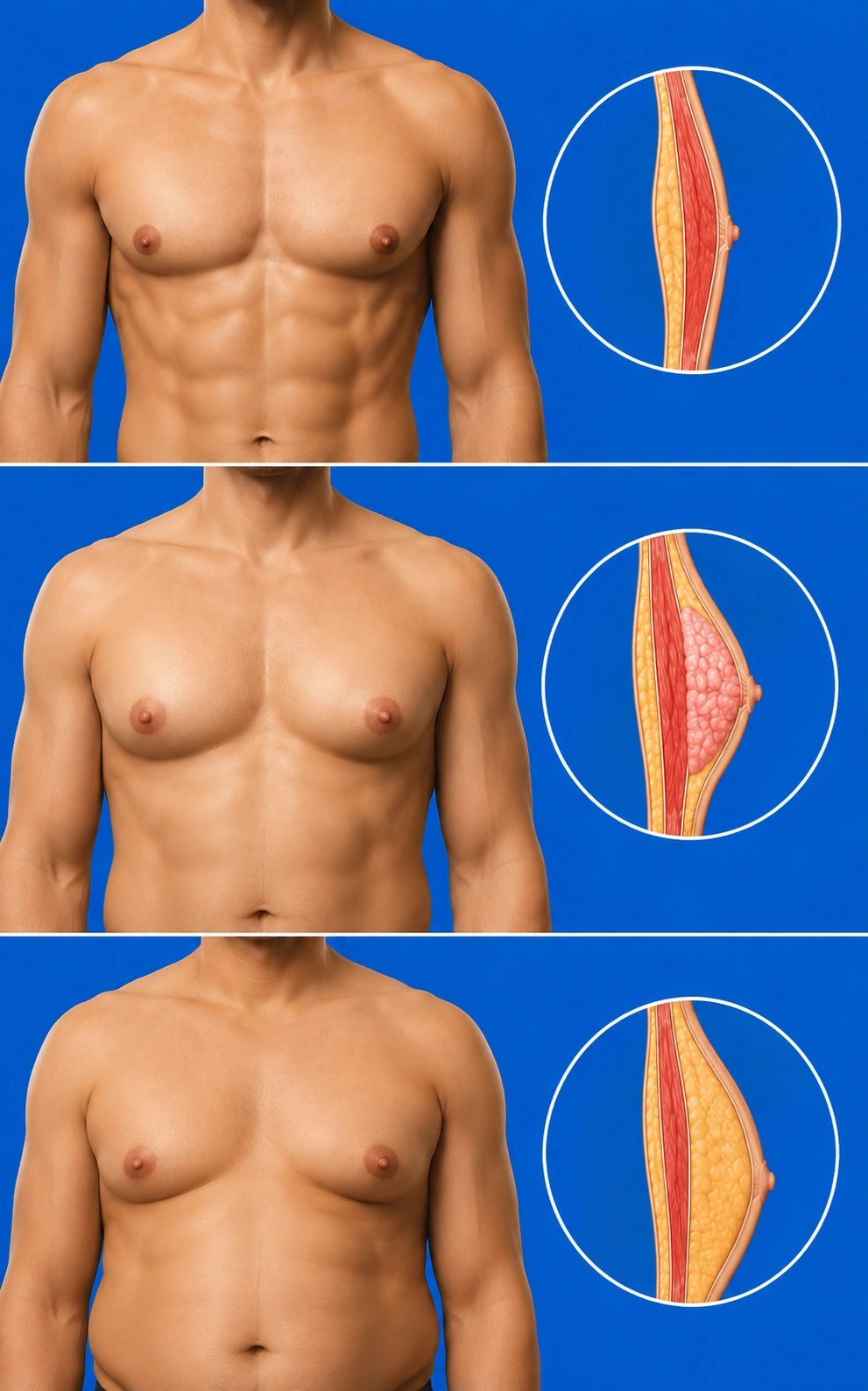
A normal male breast consists of: skin, nipple, areola, a small breast gland, a fat layer, pectoralis (chest) muscle, and blood vessels and nerves.
Normally, the breast gland remains very small because of the effect of testosterone. In gynecomastia, the gland enlarges and may be accompanied by an increase in fatty tissue, producing a fuller chest appearance.
Normal Male Chest
- Flat contour
- Small breast gland
- Defined pectoral muscles
- Flat nipples
Gynecomastia Chest
- Puffy nipples
- Enlarged breast gland
- Rounded chest contour
- Loose skin (advanced)
Gynecomastia vs. Fat Chest
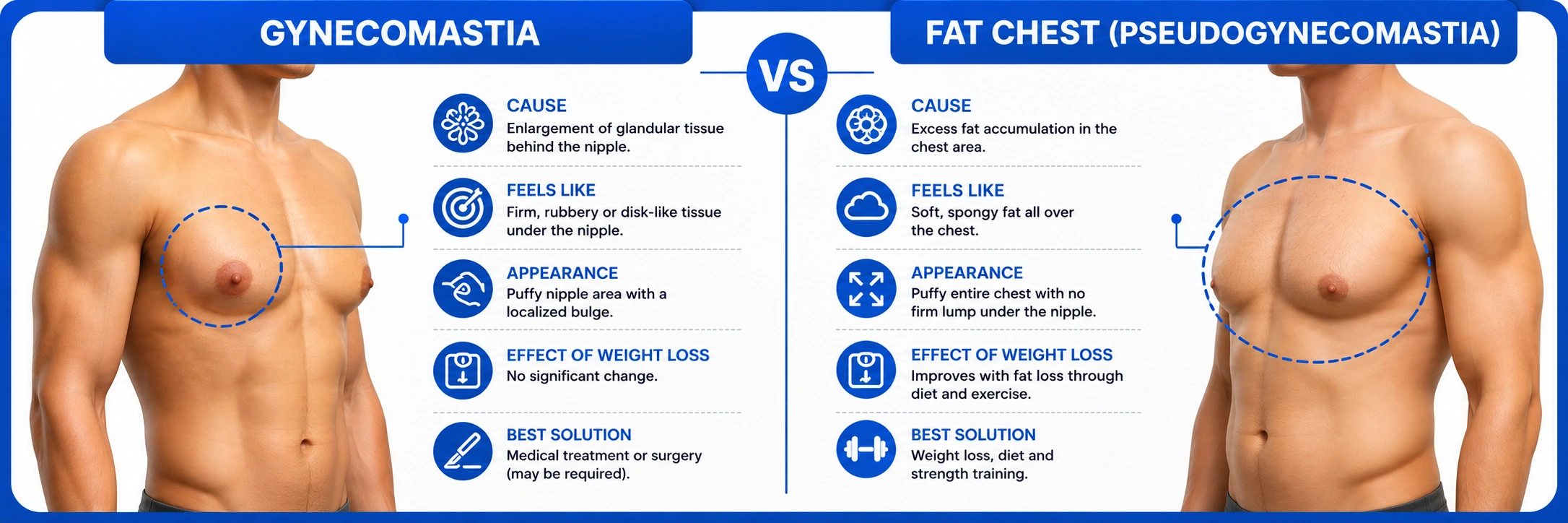
Many patients assume they simply have "chest fat," but there is an important difference.
| Feature | True Gynecomastia | Fat Chest (Pseudogynecomastia) |
|---|---|---|
| Cause | Enlarged breast gland | Excess fat deposits |
| Tissue Feel | Firm gland | Soft fat |
| Lump under nipple | Present | Usually absent |
| Pain | Sometimes | Rare |
| Weight loss effect | Little improvement | Often improves |
| Exercise effect | Cannot remove gland | Can reduce fat |
| Best Treatment | Gland excision ± liposuction | Weight loss or liposuction |
Mixed Gynecomastia
Most patients have both enlarged gland and excess fat. A combination of liposuction and gland excision provides the best result.
Pseudogynecomastia
Purely fatty chest without enlarged gland. Improves with weight loss and exercise. Liposuction may help in selected cases.
True Gynecomastia
Enlarged breast gland beneath the nipple. Does not respond to diet or exercise. Requires gland excision for permanent correction.
If your chest remains enlarged despite losing weight and exercising regularly, the enlargement may be caused by breast gland tissue rather than fat alone.
How Common Is Gynecomastia?
Gynecomastia is much more common than most people realize.
of males develop gynecomastia at some stage of life
of adolescent boys experience temporary breast enlargement during puberty
It is also common after the age of 40 because of natural hormonal changes. Many men never seek treatment because they feel embarrassed or assume they are the only ones with the problem. In reality, gynecomastia is one of the most frequently treated conditions in plastic surgery.

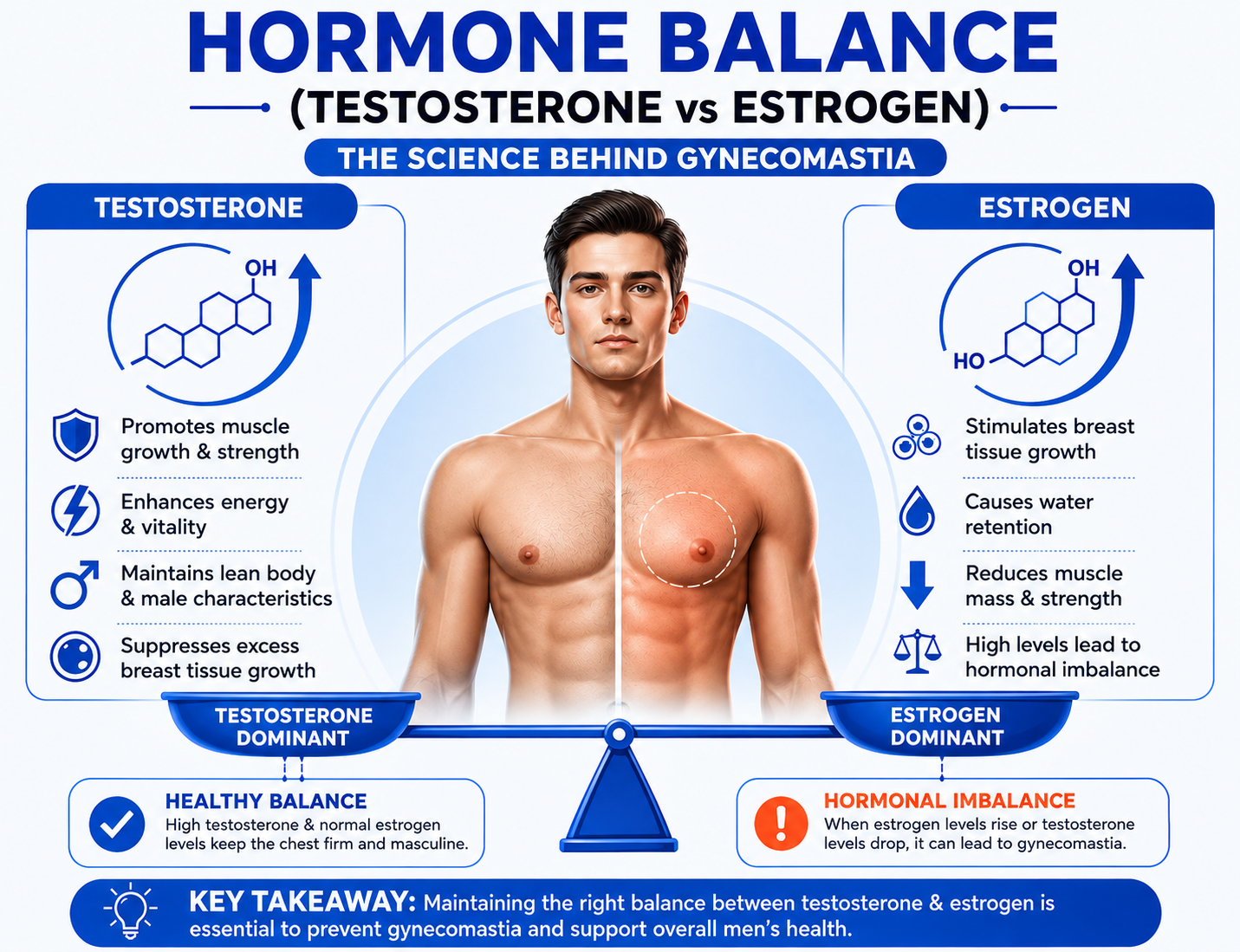
Why Does Gynecomastia Occur?
The most common cause is an imbalance between testosterone and estrogen.
Testosterone
Primary male hormone. Maintains masculine characteristics. Helps keep breast tissue small.
Estrogen
Present in small amounts in males. Stimulates breast tissue growth.
When the influence of estrogen becomes relatively greater than testosterone, the breast gland enlarges. This imbalance may occur naturally or due to obesity, medications, certain medical conditions, or anabolic steroid use.
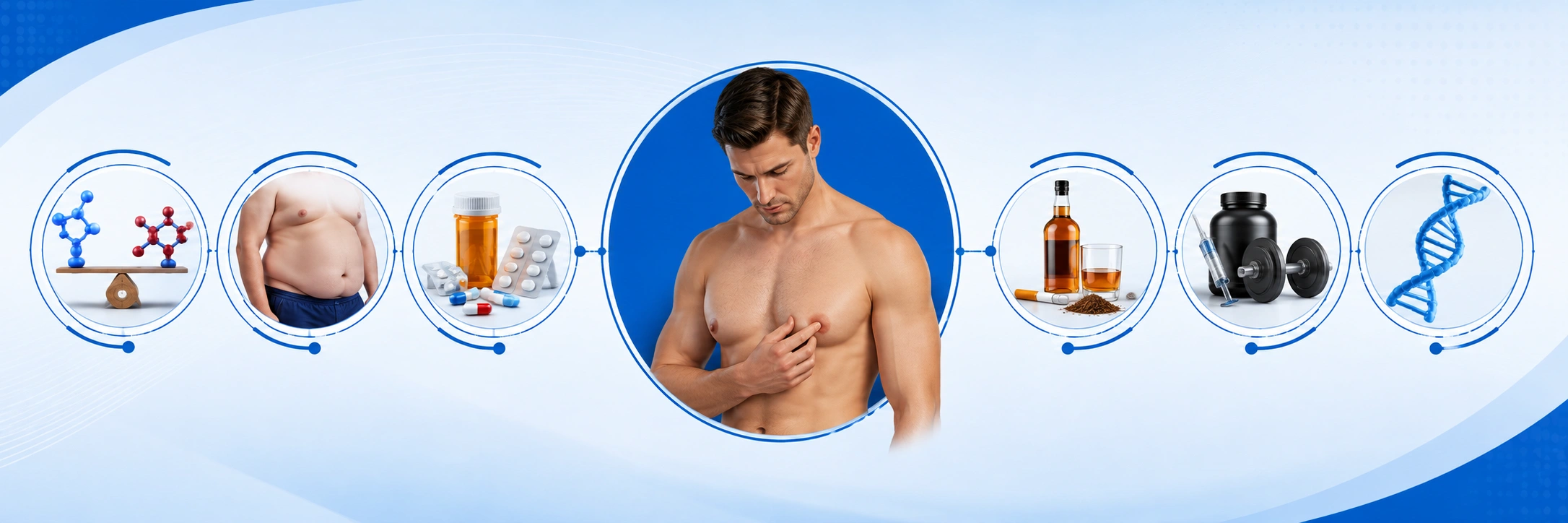
Common Causes of Gynecomastia
Gynecomastia may result from one or more of the following:
Hormonal Changes
The most common cause during puberty and aging. Temporary breast enlargement during puberty often resolves naturally within 1–2 years.
Obesity
Excess body fat increases estrogen production and can worsen chest enlargement.
Medications
Some medicines used for high blood pressure, heart disease, ulcers, depression, anxiety, prostate disorders, or hormonal therapy may contribute.
Anabolic Steroids
A common cause among bodybuilders and athletes. Excess testosterone from steroids can be converted into estrogen, stimulating breast gland growth.
Alcohol & Recreational Drugs
Heavy alcohol use and certain recreational drugs may increase the risk by affecting liver function and hormone metabolism.
Medical Conditions
Including liver disease, kidney disease, thyroid disorders, hormonal disorders, and rare hormone-producing tumors.
Idiopathic
In many patients, no specific cause is identified despite careful evaluation. This is a recognized medical diagnosis.
Genetics
Some men have an inherited tendency to develop gynecomastia, though most cases occur without a strong family history.
Do not ignore persistent breast enlargement. Although gynecomastia is usually benign, a proper evaluation helps identify the underlying cause, distinguish it from other conditions, and determine the most appropriate treatment.
Types of Gynecomastia
Gynecomastia is not the same in every patient. The amount of breast gland, fat, skin excess, and chest shape varies from person to person.
True Gynecomastia
Caused by enlargement of breast gland tissue beneath the nipple due to hormonal imbalance. Firm or rubbery lump. Puffy nipple. Does not disappear with exercise alone.
Treatment: Gland excision ± liposuction
Pseudogynecomastia
Caused by excess fatty tissue without enlargement of the breast gland. Commonly seen in overweight men. Soft chest. No firm lump. Improves with weight loss.
Treatment: Diet, exercise, liposuction
Mixed Gynecomastia
Patients have both enlarged breast gland and excess fatty tissue. Sometimes loose skin is also present. Most common form seen in clinical practice.
Treatment: Liposuction + gland excision
Unilateral
Only one breast is enlarged. Patients often notice uneven chest, different nipple sizes, and chest asymmetry. Treatment depends on cause and severity.
Bilateral
Both breasts are enlarged. The enlargement may be equal or unequal. This is the most common presentation.
Most patients have Mixed Gynecomastia (gland + fat), not pure gland or pure fat. Therefore, a combination of liposuction and gland excision often produces the best results.
Signs & Symptoms of Gynecomastia
Symptoms vary depending on the cause, duration, and severity. Some patients notice only puffy nipples, while others develop large, pendulous breasts.
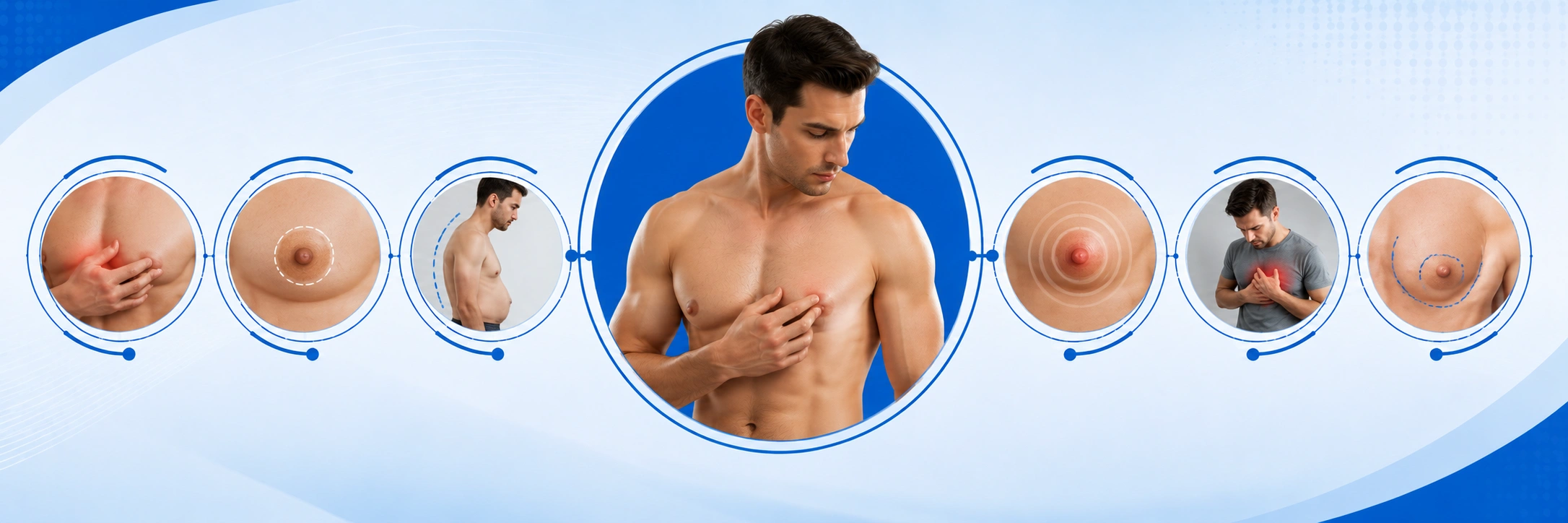
Common Signs
Common Symptoms
⚠️ Red Flag Symptoms
Although gynecomastia is usually benign, consult your doctor promptly if you notice:
These symptoms require further evaluation to exclude other conditions, including, rarely, male breast cancer. Prompt assessment is always appropriate.
Grades of Gynecomastia
Plastic surgeons commonly use the Simon Classification to assess severity and determine the most appropriate treatment.
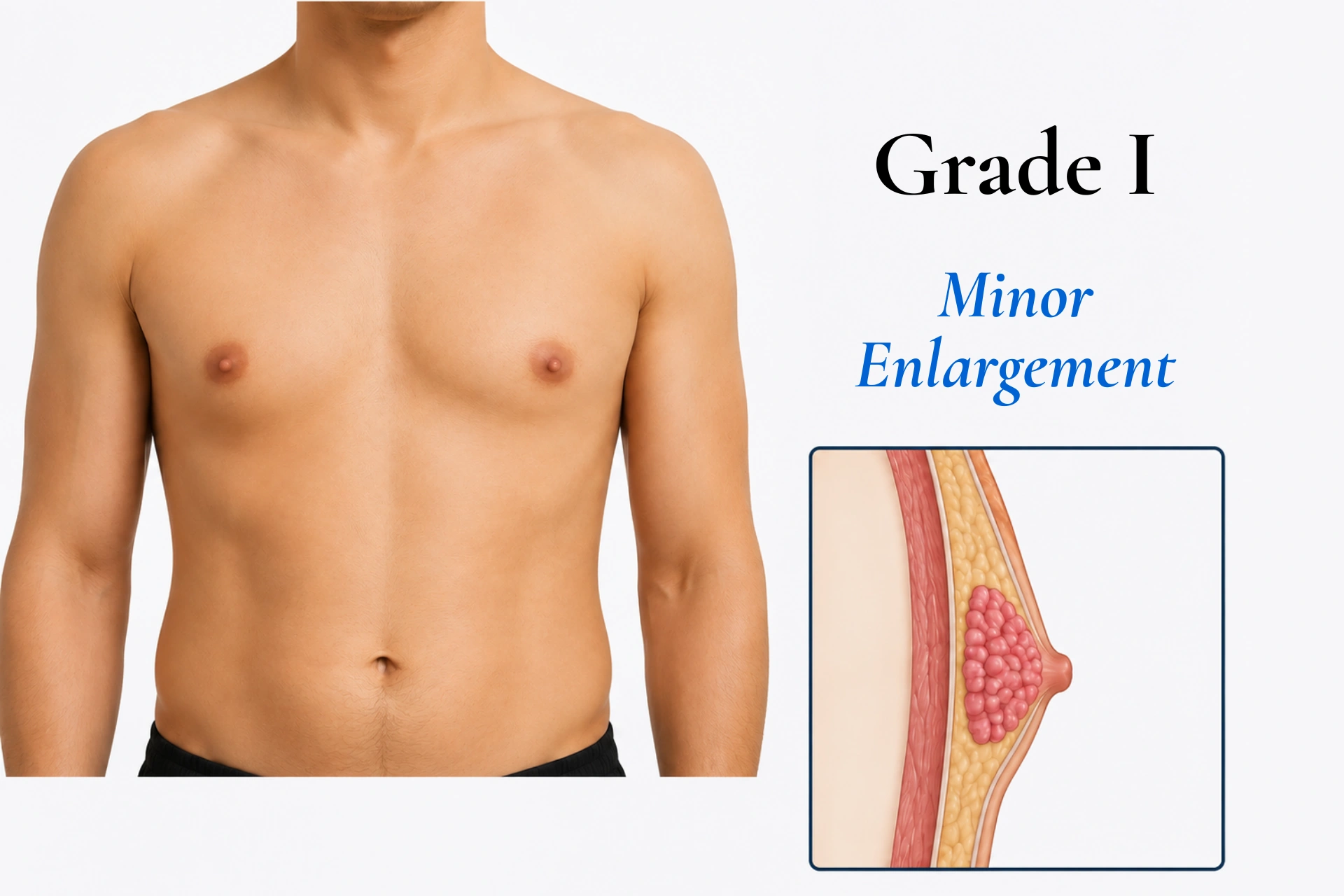
Mild Enlargement
Puffy nipple. Small breast enlargement. No loose skin. Good skin elasticity.
Treatment: Liposuction + gland excision. Fast recovery, minimal scars.
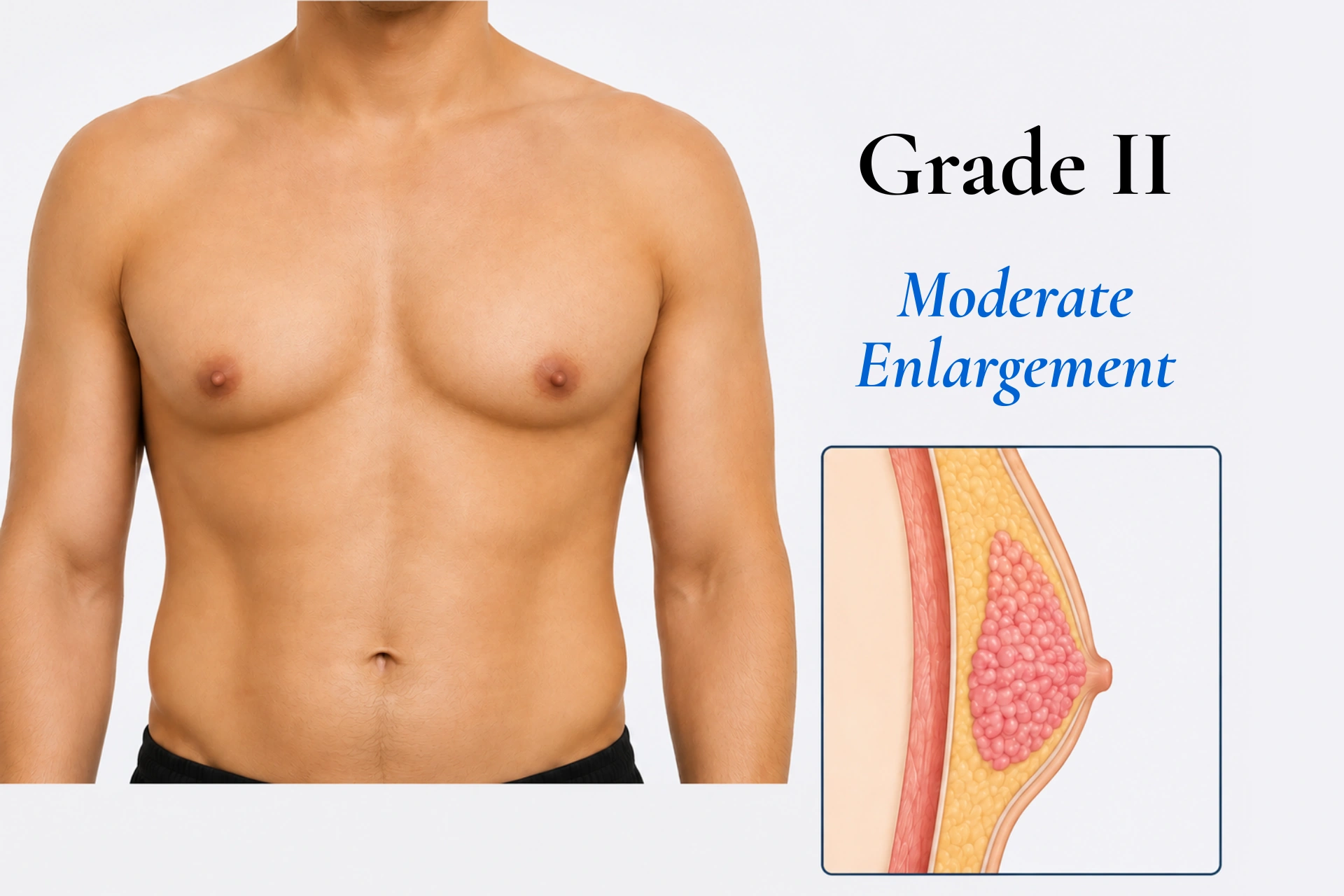
Moderate Enlargement
Moderate breast enlargement. No skin excess. More noticeable chest fullness.
Treatment: Liposuction + complete gland excision.
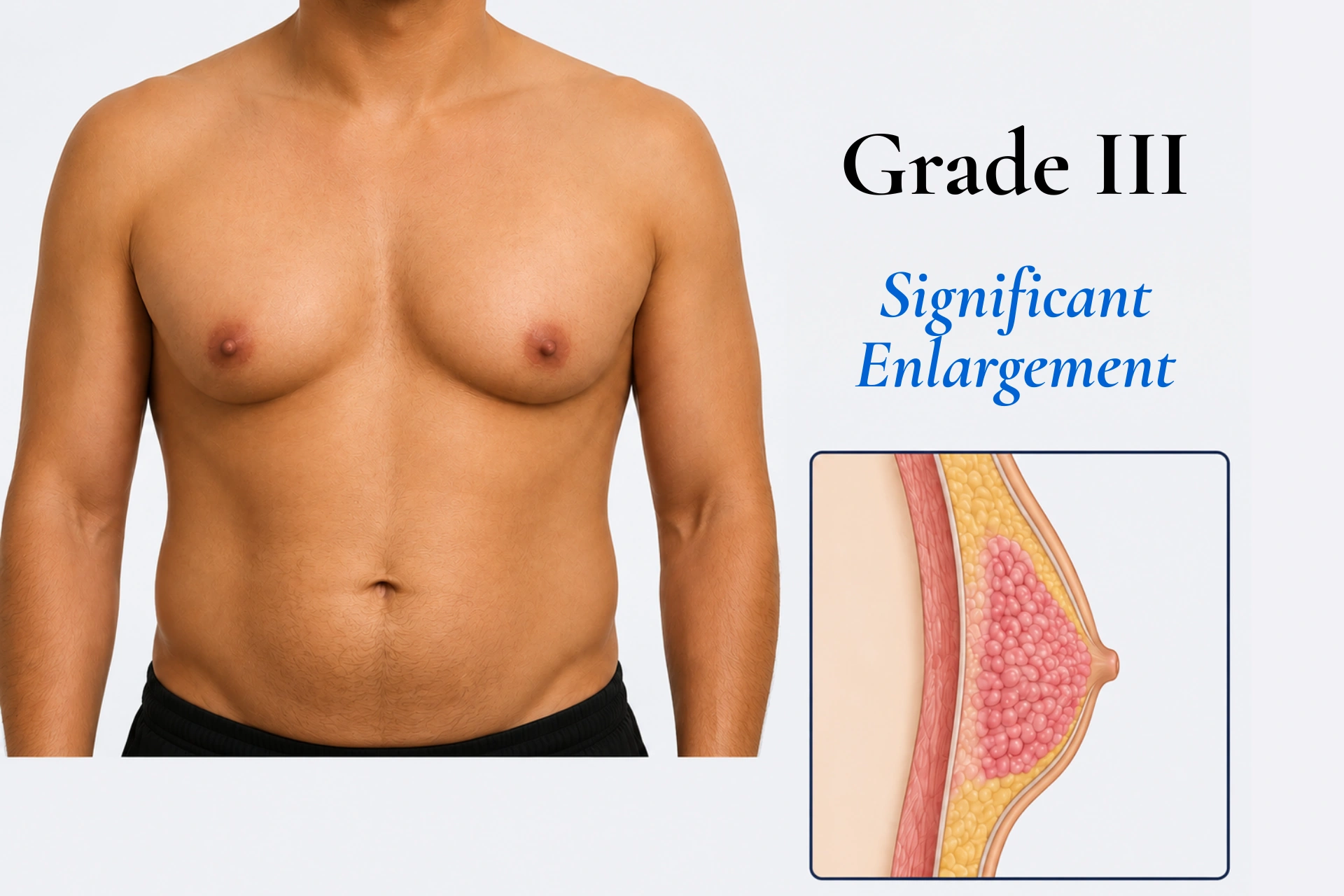
Moderate + Mild Skin Excess
Enlarged breast. Mild loose skin. Slight nipple drooping.
Treatment: Liposuction + gland excision + skin tightening when necessary.
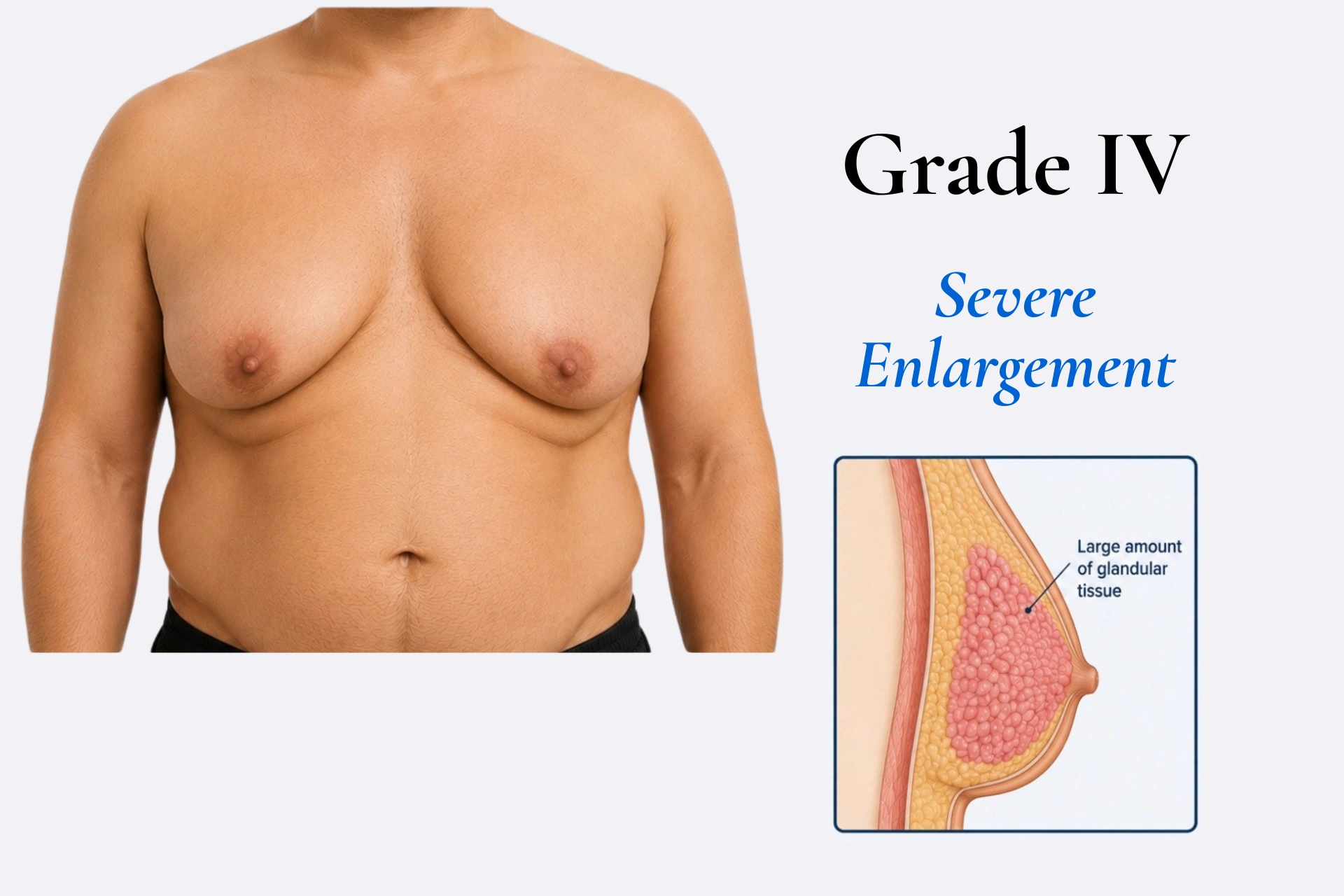
Severe Gynecomastia
Large breasts. Significant skin excess. Drooping nipple. Feminine breast appearance.
Treatment: Liposuction + gland removal + skin reduction + nipple repositioning in selected patients.
| Grade | Enlargement | Skin Excess | Recommended Treatment |
|---|---|---|---|
| Grade I | Mild | No | Liposuction + Gland Excision |
| Grade IIA | Moderate | No | Liposuction + Gland Excision |
| Grade IIB | Moderate | Mild | Liposuction + Gland Excision ± Skin Tightening |
| Grade III | Severe | Significant | Liposuction + Gland Removal + Skin Reduction |
How Is Gynecomastia Diagnosed?
Diagnosis usually begins with a detailed consultation and physical examination. Most patients do not require extensive investigations.
Medical History
Age, duration, weight changes, pain, steroid use, medications, alcohol intake, recreational drugs, previous illnesses, and family history.
Physical Examination
Breast gland, fat thickness, skin quality, nipple position, chest symmetry, breast size, and any suspicious lump. Usually distinguishes true gynecomastia from excess chest fat.
Blood Tests (if indicated)
Testosterone, estrogen, LH, FSH, prolactin, thyroid profile, liver and kidney function tests — only when clinically appropriate.
Ultrasound (selected)
Differentiating gland from fat, measuring gland size, and detecting other abnormalities when diagnosis is uncertain.
Mammography (selected)
Reserved for patients with suspicious findings or when another breast condition needs to be excluded.
Most healthy young men with typical gynecomastia do not require numerous investigations. Tests are advised only when the clinical findings suggest an underlying medical condition.
Treatment Options
Treatment depends on age, cause, duration, grade, amount of gland, fat content, skin quality, and patient expectations.
Observation
Suitable for many teenagers because pubertal gynecomastia often resolves naturally within 6–24 months. Regular monitoring with a specialist.
Lifestyle Modification
Recommended for overweight patients. Weight loss, healthy diet, regular exercise, avoiding anabolic steroids, limiting alcohol. Improves health but cannot remove enlarged gland tissue.
Medical Treatment
Certain medications may help in carefully selected patients during the early stages. Long-standing gynecomastia usually responds poorly as the gland becomes fibrous.
Surgical Treatment
Considered the gold standard for persistent gynecomastia. Provides predictable, long-lasting, and natural-looking results. Most common permanent solution.
Surgical Techniques
Every patient requires an individualized treatment plan based on gland amount, fat content, and skin excess.
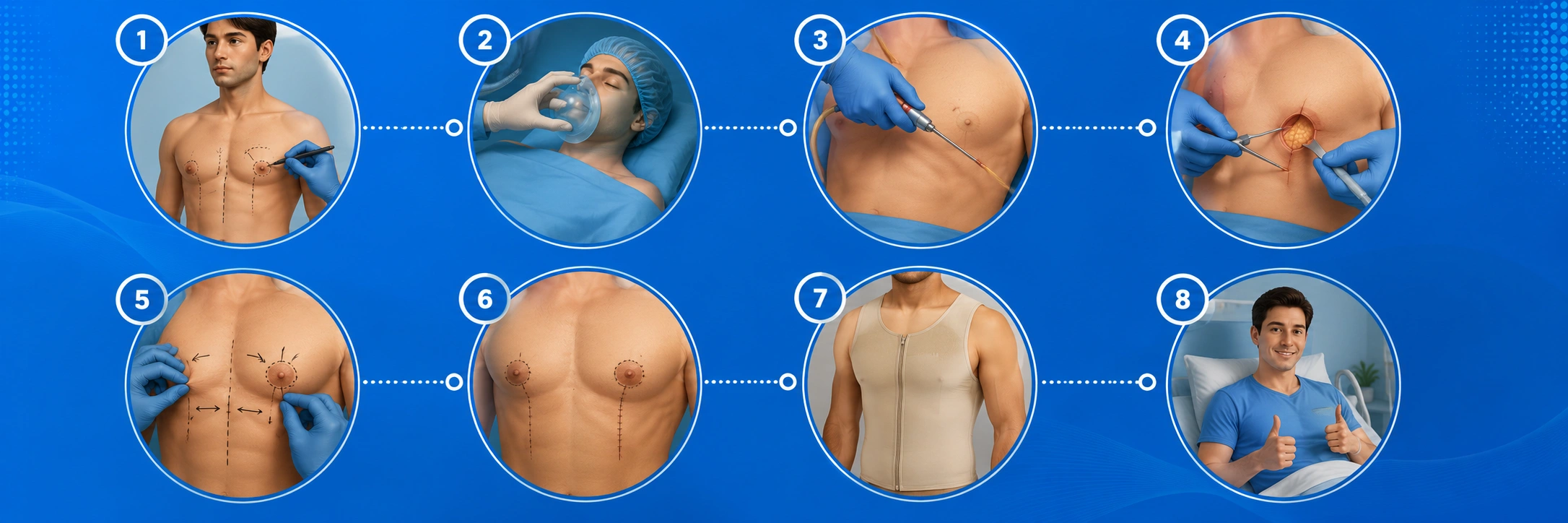
Liposuction
Best suited for excess fat, mild gynecomastia, and chest contouring. Small incisions, minimal scars, quick recovery, smooth chest contour.
Gland Excision
Essential when firm gland tissue is present. The gland is removed through a small incision hidden around the edge of the areola resulting in minimal scars. Corrects puffy nipples. Long-lasting results.
Combined Liposuction + Gland Excision
The preferred technique for most patients. Treats both fat and gland tissue, resulting in a flatter, smoother, and more masculine chest.
Skin Reduction Surgery
Patients with Grade III gynecomastia or major weight loss may require removal of excess skin, nipple repositioning, and chest reshaping for the best contour.
What Happens During Surgery?
The best surgical plan is individualized. The procedure depends on the amount of gland, fat, skin excess, and your desired outcome rather than a one-size-fits-all approach.
Recovery After Surgery
Recovery following gynecomastia surgery is generally smooth and well tolerated. Most patients experience mild discomfort, swelling, and bruising during the first few days, which gradually improve over the following weeks.
| Time After Surgery | What to Expect |
|---|---|
| Day 1 | Mild pain, swelling, bruising. Compression garment applied. Walking encouraged. |
| Week 1 | Most patients return to desk work. Swelling begins to decrease. |
| Week 2 | Bruising largely settles. Light daily activities comfortable. |
| Week 3–4 | Light exercise may be resumed with surgeon's approval. |
| 1 Month | Chest contour improves noticeably. Most routine activities can be resumed. |
| 3 Months | Swelling has significantly reduced. More defined chest contour visible. |
| 6 Months | Near-final results in most patients. |
| 12 Months | Final contour and scar maturation achieved. |
Recovery Tips
- Wear your compression garment exactly as instructed
- Take prescribed medications on time
- Keep the incision sites clean and dry
- Sleep on your back during the initial recovery period
- Avoid strenuous activities and heavy lifting until permitted
- Eat a balanced, protein-rich diet
- Stay well hydrated
- Avoid smoking and nicotine products
- Attend all scheduled follow-up visits
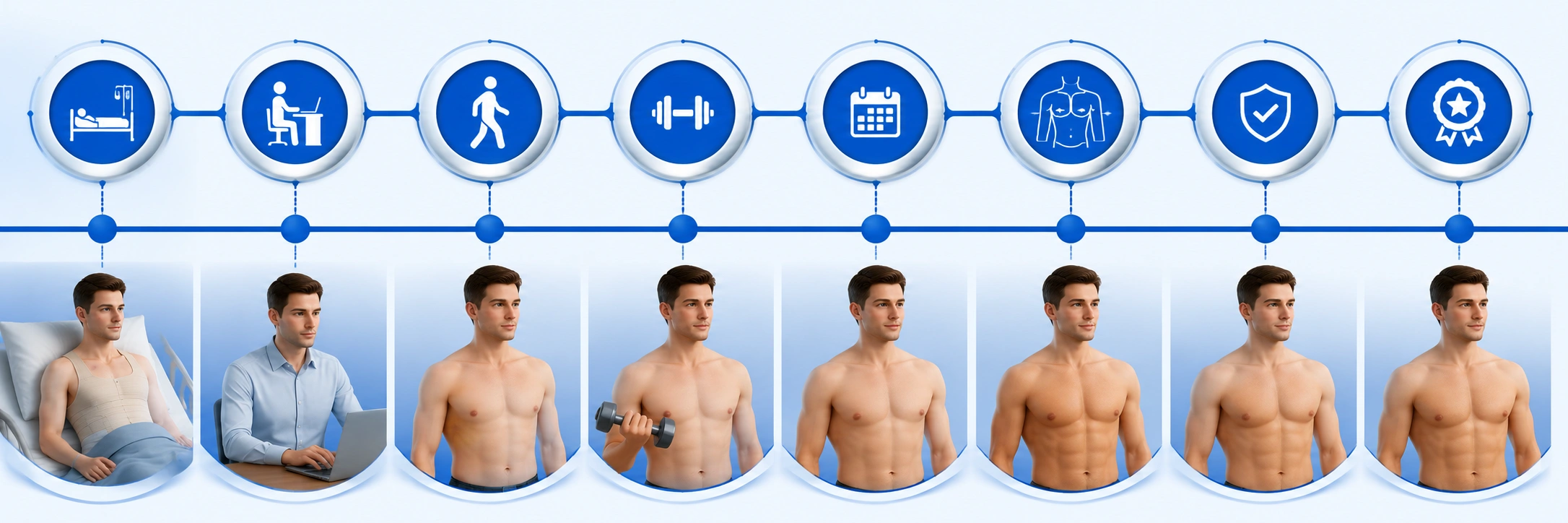
Recovery is a gradual process. Swelling and firmness improve over time, and the final result should be judged only after several months.
Benefits of Treatment
Successful treatment offers both physical and psychological benefits.
Physical Benefits
- Flatter, firmer chest
- Improved masculine contour
- Better body proportions
- Enhanced chest definition
- Better fitting clothes
- Improved posture
Emotional Benefits
- Increased self-confidence
- Improved body image
- Greater comfort at gym and while swimming
- Reduced embarrassment
- Better social confidence
- Improved quality of life
Many patients describe gynecomastia surgery as a life-changing procedure because of the positive impact it has on confidence and daily living.
Common Myths vs Facts
Read more: Visit our dedicated 100 Myths & Facts About Gynecomastia page
Am I a Good Candidate?
You May Benefit From Surgery If:
- You have enlarged male breasts
- You have puffy nipples
- You feel embarrassed removing your shirt
- You avoid swimming or the gym
- You have persistent breast enlargement
- You have good general health
- You have realistic expectations
When Should You Consult a Specialist?
- Breast enlargement persists beyond puberty
- Weight loss has not improved your chest
- You feel a firm lump beneath the nipple
- Your chest affects your confidence
- You have pain, tenderness, or asymmetry
- You notice rapid enlargement or unusual changes
Early evaluation helps identify the cause and determine the most appropriate treatment.
Why Choose Dr. Ashutosh Soni?
Trusted Expertise. Personalized Care. Natural Results. Choosing the right Plastic and Cosmetic surgeon is one of the most important decisions in your gynecomastia treatment journey.

- Over 30 years of experience in Plastic & Cosmetic Surgery
- MCh (Plastic Surgery), MS (General Surgery), MBBS; MNAMS
- Professor & Head of Department of Plastic Surgery
- Special interest in Gynecomastia Surgery
- Thousands of Plastic & Cosmetic Surgery procedures performed
- Evidence-based treatment planning
- Personalized surgical approach
- Natural-looking masculine chest contour
- Confidential consultation and complete privacy
- Comprehensive post-operative follow-up
From Consultation to Confidence
Book Your Consultation
Online or in person at Star Hospital, Udaipur.
Clinical Examination
Detailed assessment by Dr. Ashutosh Soni.
Diagnosis & Grading
Accurate classification of your gynecomastia.
Personalized Plan
Tailored surgical plan with realistic expectations.
Surgery
Performed by Dr. Soni using modern minimally invasive techniques.
Recovery & Follow-up
Comprehensive post-operative care and monitoring.
Enjoy New Confidence
A flatter, more masculine chest and renewed self-confidence.
Related Patient Guides
Grades & Classification
Understand the different grades of gynecomastia and what they mean for treatment.
100 Myths & Facts
Bust common misconceptions about gynecomastia, causes, exercise, and surgery.
Complete FAQ Guide
Answers to the most common patient questions about gynecomastia and surgery.
About Us
Learn about Gynecomastia Surgery India, Dr. Ashutosh Soni, and Star Hospital, Udaipur.
Take the First Step Towards a
More Confident You
If enlarged male breasts are affecting your confidence or daily life, you don't have to live with the condition. A professional consultation can help determine the cause and identify the most suitable treatment for your individual needs. Schedule your confidential consultation today.