Patient Education

The Ultimate Guide to Gynecomastia Myths & Facts

100 Common Myths Every Man Should Know. Accurate information is the first step toward informed decisions about gynecomastia.

100 Myths Answered Across 10 Sections
1
Section 1 · Myths 1–10

Understanding Gynecomastia

Myth 1
Myth
Gynecomastia is just chest fat.
Fact
False. True gynecomastia is the enlargement of male breast gland tissue, not just fat. Many men have a combination of gland and fat (mixed gynecomastia), making proper diagnosis important.
Key Takeaway: Exercise reduces fat but does not remove breast gland tissue.
Myth 2
Myth
Gynecomastia and chest fat are the same condition.
Fact
False. Gynecomastia is caused by enlarged breast glands, whereas Pseudogynecomastia is caused mainly by excess fat. The treatment for each may differ.
Key Takeaway: Correct diagnosis is the first step toward effective treatment.
Myth 3
Myth
Only overweight men develop gynecomastia.
Fact
False. Gynecomastia can affect slim, athletic, muscular, and overweight men. Body weight alone does not determine who develops this condition.
Key Takeaway: Men of all body types can develop gynecomastia.
Myth 4
Myth
Thin or muscular men cannot have gynecomastia.
Fact
False. Even bodybuilders and lean athletes may develop gynecomastia because the problem is related to breast gland tissue and hormonal balance, not body fat alone.
Key Takeaway: Being fit does not prevent gynecomastia.
Myth 5
Myth
Gynecomastia is a rare disease.
Fact
False. Gynecomastia is one of the most common breast conditions in males and can occur during infancy, puberty, adulthood, and older age.
Key Takeaway: Gynecomastia is common and often treatable.
Myth 6
Myth
Every enlarged male breast is gynecomastia.
Fact
False. An enlarged male chest may be due to fat, enlarged breast glands, muscle development, or, rarely, another medical condition. A clinical examination helps determine the exact cause.
Key Takeaway: Not every enlarged chest is true gynecomastia.
Myth 7
Myth
Gynecomastia is a form of breast cancer.
Fact
False. Gynecomastia is a benign (non-cancerous) enlargement of breast gland tissue. Although male breast cancer is rare, any unusual lump should be evaluated by a doctor.
Key Takeaway: Most gynecomastia is benign, but suspicious lumps should never be ignored.
Myth 8
Myth
Gynecomastia always affects both breasts equally.
Fact
False. It may affect one breast or both, and one side is often larger than the other. Mild asymmetry is common.
Key Takeaway: Unequal breast enlargement is common in gynecomastia.
Myth 9
Myth
One-sided gynecomastia always means cancer.
Fact
False. Unilateral gynecomastia is relatively common and is usually benign. However, any rapidly growing, hard, or unusual lump should be assessed by a specialist.
Key Takeaway: One-sided enlargement needs evaluation, but it is not usually cancer.
Myth 10
Myth
Nothing can be done about gynecomastia.
Fact
False. Many men can be successfully treated. Depending on the cause and duration, treatment may involve observation, medical management in selected cases, or surgery for persistent gland enlargement.
Key Takeaway: Effective treatment options are available for most patients.
Dr. Ashutosh's Clinical Experience
"One of the most common misconceptions I hear is, 'Doctor, I thought it was just fat, so I kept exercising.' In reality, many patients who come to my clinic have a firm breast gland beneath the nipple that cannot be removed by diet or exercise alone. A simple clinical examination often provides the answer and helps choose the right treatment."
Did You Know?

Gynecomastia has three common age peaks: Newborns (due to maternal hormones), Teenagers (during puberty), Older men (due to age-related hormonal changes). Understanding these normal patterns helps reduce unnecessary anxiety.

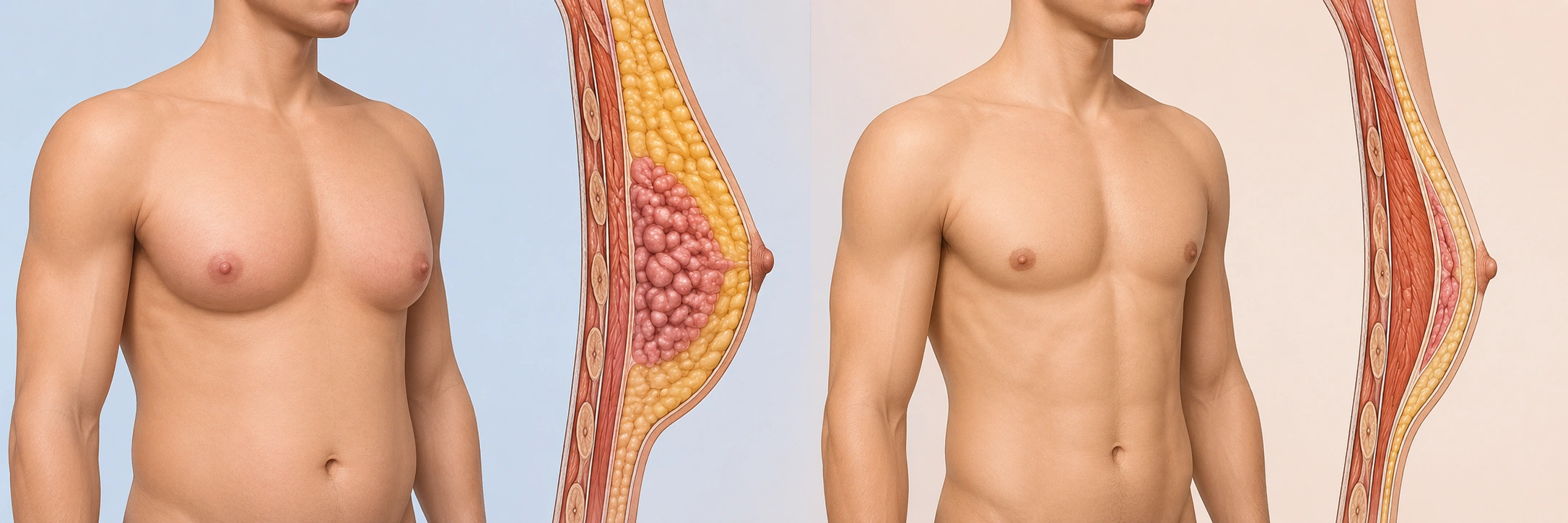
Medical illustration concept showing gynecomastia vs normal chest anatomy

Understanding the difference between glandular tissue and fat is the foundation of proper gynecomastia diagnosis.

2
Section 2 · Myths 11–20

Causes & Hormones

Myth 11
Myth
Gynecomastia is always caused by low testosterone.
Fact
False. Many men with gynecomastia have normal testosterone levels. The condition usually develops because of an imbalance between estrogen and testosterone rather than low testosterone alone.
Key Takeaway: Normal testosterone levels do not rule out gynecomastia.
Myth 12
Myth
Only high estrogen causes gynecomastia.
Fact
False. Gynecomastia occurs when the balance between estrogen and testosterone changes. This may happen even when both hormone levels are within the normal range.
Key Takeaway: Hormone balance is more important than individual hormone levels.
Myth 13
Myth
Every patient with gynecomastia has abnormal hormone tests.
Fact
False. Most men with gynecomastia have normal blood test results. Hormonal investigations are recommended only when indicated by the patient's age, symptoms, medical history, or examination.
Key Takeaway: Normal hormone tests are common in gynecomastia.
Myth 14
Myth
Doctors can always identify the exact cause of gynecomastia.
Fact
False. In many adults, no specific cause is found despite appropriate evaluation. This is known as idiopathic gynecomastia and is a recognized medical diagnosis.
Key Takeaway: Not every case has an identifiable cause.
Myth 15
Myth
Gynecomastia always runs in families.
Fact
False. While genetics may influence susceptibility in some individuals, many patients have no family history of gynecomastia.
Key Takeaway: Most cases occur without a strong family history.
Myth 16
Myth
Stress cannot contribute to gynecomastia.
Fact
Partly false. Stress itself is not a direct cause of gynecomastia, but chronic stress may affect hormone regulation, sleep, weight, and overall health, which can indirectly contribute in some individuals.
Key Takeaway: Managing stress supports overall hormonal health, but stress alone is rarely the sole cause.
Myth 17
Myth
Aging never causes gynecomastia.
Fact
False. Age-related hormonal changes, increased body fat, and the use of certain medications make gynecomastia more common in older men.
Key Takeaway: Gynecomastia is common during both puberty and older age.
Myth 18
Myth
Liver disease has nothing to do with gynecomastia.
Fact
False. The liver helps regulate hormone metabolism. Significant liver disease can disturb hormone balance and contribute to gynecomastia.
Key Takeaway: Persistent gynecomastia may occasionally be associated with underlying medical conditions.
Myth 19
Myth
Thyroid disease cannot cause gynecomastia.
Fact
False. Certain thyroid disorders, especially an overactive thyroid (hyperthyroidism), may contribute to hormonal changes that promote gynecomastia.
Key Takeaway: Treating the underlying thyroid disorder may help in selected patients.
Myth 20
Myth
Testicular problems have no relation to gynecomastia.
Fact
False. Although uncommon, some testicular conditions and hormone-producing tumors can present with gynecomastia. A careful medical evaluation helps rule out these rare but important causes.
Key Takeaway: New-onset gynecomastia should always be assessed by a qualified doctor.
Dr. Ashutosh's Clinical Experience
"One of the first questions patients ask is, 'Doctor, what caused this?' In many cases, despite appropriate investigations, no single cause is identified. The important point is that successful treatment depends on understanding the current condition—not always on finding a definite cause."
Did You Know?

About 60–70% of adolescent boys may develop some degree of breast enlargement during puberty. In most, it improves naturally within 1–3 years without surgery.

When Should You See a Doctor Immediately?

Seek prompt medical evaluation if you notice: a rapidly enlarging breast lump, a hard or irregular lump, bloody or spontaneous nipple discharge, skin dimpling or nipple retraction, a lump associated with enlarged lymph nodes, or significant breast enlargement accompanied by testicular swelling, unexplained weight loss, or other concerning symptoms. These findings do not necessarily mean cancer, but they require timely assessment.

Fact Check

Does testosterone therapy always prevent gynecomastia? No. In some men, testosterone can be converted into estrogen through a natural process called aromatization. This is one reason why testosterone replacement therapy should only be taken under medical supervision.
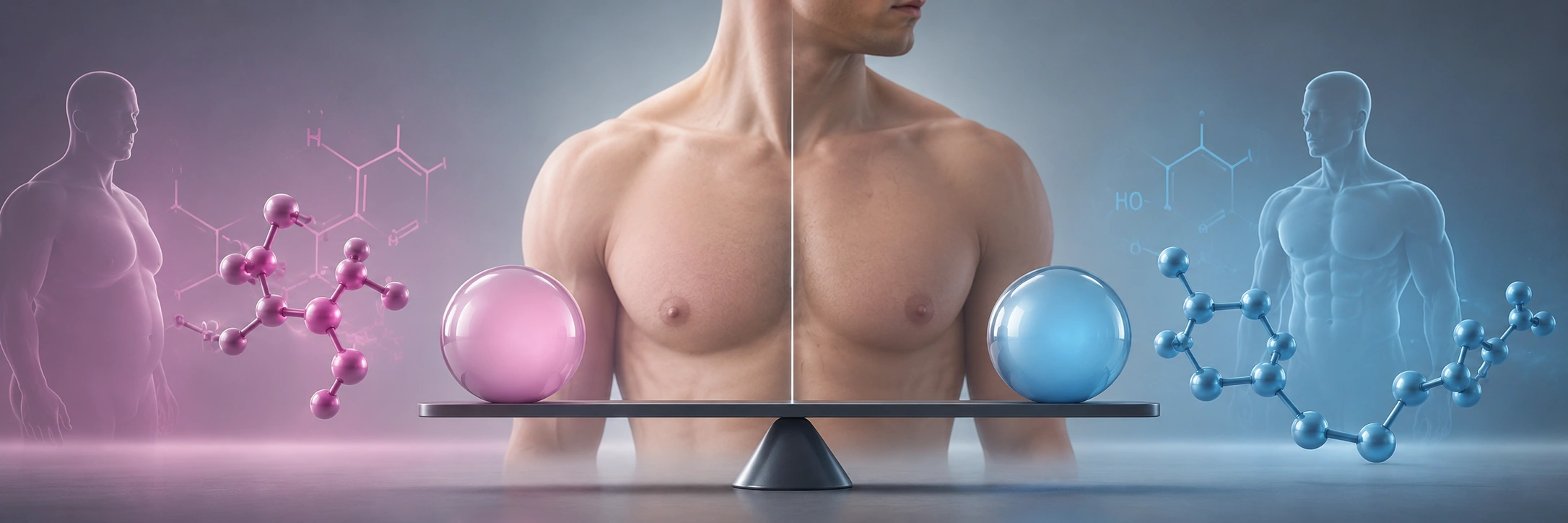
Hormone balance concept — estrogen and testosterone balance in gynecomastia

Gynecomastia results from hormonal imbalance between estrogen and testosterone, not necessarily abnormal hormone levels.

3
Section 3 · Myths 21–30

Food, Lifestyle & Supplements

Myth 21
Myth
Protein powder causes gynecomastia.
Fact
False. Pure whey or plant-based protein supplements have not been shown to cause gynecomastia. The concern is with products contaminated with anabolic steroids, prohormones, or other undeclared ingredients.
Key Takeaway: Choose protein supplements from reputable manufacturers.
Myth 22
Myth
Creatine causes gynecomastia.
Fact
False. There is currently no convincing scientific evidence that creatine itself causes gynecomastia when taken in recommended doses.
Key Takeaway: Creatine has not been proven to cause gynecomastia.
Myth 23
Myth
Eating soy causes gynecomastia.
Fact
False. Normal dietary intake of soy foods has not been shown to cause gynecomastia in healthy men. Excessive intake has only rarely been reported in isolated cases.
Key Takeaway: Moderate soy consumption is generally considered safe.
Myth 24
Myth
Chicken or milk causes gynecomastia.
Fact
False. There is no reliable scientific evidence that normal consumption of chicken or dairy products causes gynecomastia. A balanced diet remains an important part of good health.
Key Takeaway: Ordinary chicken and milk are not proven causes of gynecomastia.
Myth 25
Myth
Beer directly causes gynecomastia.
Fact
False. Beer itself is not a direct cause. However, excessive alcohol intake can affect liver function and hormone metabolism, which may contribute to gynecomastia.
Key Takeaway: Heavy alcohol consumption is a greater concern than an occasional drink.
Myth 26
Myth
Alcohol has no effect on gynecomastia.
Fact
False. Chronic or excessive alcohol consumption may disturb hormone balance and increase the risk of gynecomastia, particularly when liver disease develops.
Key Takeaway: Limiting alcohol benefits both hormonal and overall health.
Myth 27
Myth
Marijuana never causes gynecomastia.
Fact
Not entirely true. Some studies have suggested a possible association, while others have not found a clear link. Current evidence remains inconclusive.
Key Takeaway: The relationship between marijuana and gynecomastia is still being studied.
Myth 28
Myth
Anabolic steroids are safe and never cause gynecomastia.
Fact
False. Anabolic steroids are one of the most common preventable causes of gynecomastia. They can disrupt the normal hormone balance, leading to enlargement of breast gland tissue.
Key Takeaway: Avoid non-medical use of anabolic steroids.
Myth 29
Myth
Herbal medicines can permanently cure gynecomastia.
Fact
False. No herbal remedy has been scientifically proven to remove established breast gland tissue. Some products may even contain undeclared hormones or other substances.
Key Takeaway: Be cautious of "miracle cures" marketed online.
Myth 30
Myth
Internet pills can permanently cure gynecomastia.
Fact
False. Many products sold online make unsupported claims and lack scientific evidence. Some may be ineffective or even harmful.
Key Takeaway: Always seek advice from a qualified doctor before taking supplements or medications for gynecomastia.
Dr. Ashutosh's Clinical Experience
"Many patients stop eating soy, chicken, milk, or protein supplements because they believe these foods caused their gynecomastia. In reality, the most important step is determining whether the enlargement is due to glandular tissue, fat, medications, anabolic steroids, or an underlying medical condition—not blaming everyday foods without evidence."
Did You Know?

Many bodybuilding supplements sold through unregulated sources have been found to contain undeclared anabolic steroids or hormone-like substances. Choosing products from reputable manufacturers and avoiding non-prescribed performance-enhancing drugs can reduce unnecessary health risks.

Warning

Never stop prescribed medications on your own because you think they are causing gynecomastia. If you are concerned, discuss the issue with your treating doctor. In some cases, a safer alternative medication may be available.

Common Patient Question

"Doctor, should I stop drinking milk and eating chicken?" Answer: For most people, no. There is no convincing scientific evidence that normal consumption of milk or chicken causes gynecomastia. Instead, focus on maintaining a healthy weight, exercising regularly, and seeking medical evaluation if breast enlargement persists.

Fact Check

Can gym supplements cause gynecomastia? Standard protein powders and creatine have not been proven to cause gynecomastia. The greater concern is supplements contaminated with anabolic steroids, prohormones, or other undeclared substances.

Gym supplements and healthy diet — understanding which supplements are safe for gynecomastia patients

Most standard protein supplements do not cause gynecomastia. The risk lies in contaminated or unregulated products.

4
Section 4 · Myths 31–40

Exercise & Weight Loss

Myth 31
Myth
Push-ups can cure gynecomastia.
Fact
False. Push-ups strengthen the chest muscles but do not remove enlarged breast gland tissue. They may improve muscle tone, but true gynecomastia usually remains.
Bottom Line: Push-ups build muscle—not remove breast glands.
Myth 32
Myth
Bench press will flatten my chest.
Fact
False. Bench press exercises enlarge the pectoral muscles underneath the breast tissue. In some men, this can even make the gland appear more prominent.
Bottom Line: Bigger chest muscles do not eliminate glandular enlargement.
Myth 33
Myth
Chest exercises can dissolve breast glands.
Fact
False. No exercise can dissolve or shrink established glandular breast tissue. Exercise benefits overall fitness but cannot replace appropriate treatment for persistent gynecomastia.
Bottom Line: Gland tissue cannot be exercised away.
Myth 34
Myth
Losing weight always cures gynecomastia.
Fact
False. Weight loss reduces body fat and improves overall health, but glandular breast tissue often remains. Many men notice that after losing weight, the remaining gland becomes even more obvious.
Bottom Line: Weight loss helps fat—but not established breast glands.
Myth 35
Myth
Running cures gynecomastia.
Fact
False. Running burns calories and reduces body fat, but it does not remove glandular breast tissue.
Bottom Line: Cardio improves fitness, not gland enlargement.
Myth 36
Myth
Swimming removes gynecomastia.
Fact
False. Swimming is an excellent whole-body exercise, but like other forms of exercise, it cannot eliminate breast gland tissue.
Bottom Line: Swimming strengthens the body but does not shrink breast glands.
Myth 37
Myth
Massaging the chest melts breast glands.
Fact
False. Massage cannot dissolve glandular tissue or permanently reduce breast enlargement. There is no scientific evidence supporting this claim.
Bottom Line: Massage does not remove gynecomastia.
Myth 38
Myth
Compression garments permanently cure gynecomastia.
Fact
False. Compression vests temporarily flatten the chest under clothing and are useful after surgery, but they do not remove gland tissue or cure gynecomastia.
Bottom Line: Compression improves appearance—not the underlying condition.
Myth 39
Myth
Bodybuilders cannot develop gynecomastia.
Fact
False. Bodybuilders may actually have a higher risk of gynecomastia, particularly if anabolic steroids or hormone-enhancing substances are used.
Bottom Line: Excellent physique does not guarantee protection from gynecomastia.
Myth 40
Myth
Exercise is useless for men with gynecomastia.
Fact
False. Although exercise cannot remove breast glands, it improves overall health, body composition, posture, confidence, and surgical outcomes.
Bottom Line: Keep exercising—it benefits your health, even if it doesn't remove the gland.
Dr. Ashutosh's Clinical Experience
"One of the most common stories I hear is, 'Doctor, I've been doing push-ups and bench presses for two years, but my chest hasn't improved.' Exercise is excellent for fitness, but when a firm gland is present beneath the nipple, it usually does not disappear with workouts alone. Understanding this difference often saves patients years of frustration."
Did You Know?

Many men first notice their gynecomastia after significant weight loss. As the surrounding fat decreases, the remaining gland beneath the nipple becomes more noticeable.

Common Patient Question

"Doctor, I lost 20 kg but my chest still looks enlarged. Why?" Answer: Weight loss removes fat, but true gynecomastia is caused by enlarged gland tissue. If gland tissue remains, the chest may continue to appear prominent despite excellent weight loss.

ActivityBurns FatBuilds MuscleRemoves Gland?
WalkingNo
RunningNo
Push-upsNo
Bench PressNo
SwimmingNo
Weight LossNo
Surgery (when indicated)Yes — removes enlarged gland tissue
Fact Check

Can spot reduction remove chest fat? No. The body loses fat in a generalized pattern, not from one specific area on demand. While overall weight loss can reduce chest fat, it cannot selectively remove fat or gland tissue from the chest alone.

Man exercising at gym — exercise improves health but cannot remove breast gland tissue

Exercise is beneficial for overall health but cannot remove established glandular tissue that causes gynecomastia.

5
Section 5 · Myths 41–50

Teenagers & Pubertal Gynecomastia

Myth 41
Myth
Every teenager with gynecomastia needs surgery.
Fact
False. Most cases of pubertal gynecomastia improve naturally within 1–3 years. Surgery is considered only if the enlargement persists, is severe, or causes significant emotional distress.
Bottom Line: Most teenagers do not require surgery.
Myth 42
Myth
Pubertal gynecomastia is abnormal.
Fact
False. Mild breast enlargement during puberty is common and usually reflects temporary hormonal changes as the body matures.
Bottom Line: Pubertal gynecomastia is often a normal stage of development.
Myth 43
Myth
Teenage gynecomastia never goes away.
Fact
False. Many cases resolve spontaneously as hormone levels stabilize. Persistent enlargement beyond late adolescence is less likely to disappear on its own.
Bottom Line: Many teenagers improve naturally with time.
Myth 44
Myth
Parents should ignore teenage gynecomastia.
Fact
False. Although many cases resolve naturally, teenagers deserve medical evaluation and emotional support. Ignoring the problem can increase anxiety and embarrassment.
Bottom Line: Reassurance and appropriate medical advice are important.
Myth 45
Myth
Teenagers are not emotionally affected by gynecomastia.
Fact
False. Gynecomastia can lead to embarrassment, low self-esteem, avoidance of sports or swimming, and reluctance to participate in social activities.
Bottom Line: Emotional well-being is an important part of treatment.
Myth 46
Myth
Gynecomastia only occurs during puberty.
Fact
False. Although common during puberty, gynecomastia can also occur in newborns, adults, and older men.
Bottom Line: Gynecomastia can occur at any age.
Myth 47
Myth
Teenagers should never undergo gynecomastia surgery.
Fact
False. Surgery may be appropriate for selected teenagers whose breast enlargement has persisted, whose development is stable, and whose quality of life is significantly affected.
Bottom Line: Surgery is considered on an individual basis—not by age alone.
Myth 48
Myth
Steroid use is harmless in teenage athletes.
Fact
False. Anabolic steroids can disrupt normal hormone balance, increase the risk of gynecomastia, and have many other serious health effects.
Bottom Line: Performance-enhancing steroids carry significant health risks.
Myth 49
Myth
Pubertal gynecomastia always affects both breasts equally.
Fact
False. One breast may enlarge before the other, or one side may remain slightly larger. Mild asymmetry is common during puberty.
Bottom Line: Uneven breast enlargement during puberty is often normal.
Myth 50
Myth
If I wait long enough, every case will disappear.
Fact
False. While many adolescent cases resolve naturally, long-standing gynecomastia that persists into adulthood is unlikely to disappear without treatment.
Bottom Line: Persistent gynecomastia deserves specialist evaluation.
Dr. Ashutosh's Clinical Experience
"Many parents are more worried than their sons. In most teenage boys, my first advice is careful observation and regular follow-up rather than immediate surgery. At the same time, I never underestimate the emotional impact the condition can have on a young person's confidence and daily life."
Did You Know?

Pubertal gynecomastia most commonly appears between 10 and 16 years of age. In many boys, it gradually improves as hormonal balance is restored during adolescence.

Common Patient Question

"Doctor, my son has had enlarged breasts for six months. Should we be worried?" Answer: Not necessarily. Mild breast enlargement during puberty is common. However, if the swelling is rapidly increasing, associated with severe pain, occurs before puberty, or persists for several years, a medical assessment is advisable.

Fact Check

Does masturbation cause pubertal gynecomastia? No. There is no scientific evidence that masturbation causes gynecomastia. This is one of the most common myths and often creates unnecessary guilt and anxiety among teenagers.

Teenage boy — pubertal gynecomastia is common and often resolves naturally without surgery

Pubertal gynecomastia is common and often resolves naturally within 1–3 years. Medical evaluation and emotional support are important.

6
Section 6 · Myths 51–60

Diagnosis & Investigations

Myth 51
Myth
Every breast lump in a man is breast cancer.
Fact
False. Most breast lumps in men are benign conditions such as gynecomastia. However, any new, hard, irregular, or rapidly growing lump should always be evaluated by a doctor.
Bottom Line: Most male breast lumps are not cancer, but every new lump deserves proper evaluation.
Myth 52
Myth
Every breast lump is gynecomastia.
Fact
False. Breast enlargement in men may be due to gynecomastia, excess fat (pseudogynecomastia), cysts, lipomas, infections, or, rarely, breast cancer.
Bottom Line: Not every breast lump is gynecomastia.
Myth 53
Myth
A doctor can diagnose gynecomastia just by looking at a photograph.
Fact
False. While photographs are useful for an initial opinion, a proper diagnosis usually requires a detailed history and physical examination. Some patients may also need imaging or blood tests.
Bottom Line: A photograph cannot replace a clinical examination.
Myth 54
Myth
Physical examination is unnecessary.
Fact
False. A careful examination remains the most important step in diagnosing gynecomastia. It helps distinguish glandular tissue from fat and identifies any features that require further investigation.
Bottom Line: Examination is the cornerstone of diagnosis.
Myth 55
Myth
Every patient needs hormone tests.
Fact
False. Hormone tests are performed only when clinically indicated, such as in younger patients, rapidly enlarging breasts, recurrent gynecomastia, or when an underlying hormonal disorder is suspected.
Bottom Line: Blood tests are individualized—not routine for everyone.
Myth 56
Myth
Every patient needs an ultrasound or mammogram.
Fact
False. Many patients can be diagnosed based on their history and physical examination alone. Imaging is recommended only when there is uncertainty or suspicion of another condition.
Bottom Line: Imaging is selective, not mandatory.
Myth 57
Myth
Mammography is only for women.
Fact
False. Although uncommon, mammography can also be used in men when there is concern about an abnormal breast lump or possible breast cancer.
Bottom Line: Men may also require mammography in selected situations.
Myth 58
Myth
Pain always means cancer.
Fact
False. Mild pain or tenderness is common in early gynecomastia. Male breast cancer is often painless in its early stages.
Bottom Line: Pain alone does not indicate cancer.
Myth 59
Myth
If there is no pain, there is no problem.
Fact
False. Many men with gynecomastia have no pain at all. Likewise, some serious breast conditions may also be painless, so persistent enlargement should be assessed.
Bottom Line: Absence of pain does not rule out disease.
Myth 60
Myth
Every patient needs a biopsy.
Fact
False. Biopsy is rarely required for typical gynecomastia. It is reserved for unusual or suspicious cases where the diagnosis remains uncertain.
Bottom Line: Most patients do not require a biopsy.
Dr. Ashutosh's Clinical Experience
"One of the most reassuring moments for patients is when a careful examination explains what they are feeling beneath the nipple. In many cases, a detailed history and physical examination provide more useful information than a long list of unnecessary investigations."
Fact Check

Can ultrasound tell the difference between gland and fat? Yes. Ultrasound can often help distinguish glandular tissue from fatty tissue and identify other abnormalities. However, not every patient needs an ultrasound if the clinical examination is clear.


7
Section 7 · Myths 61–70

Non-Surgical Treatment

Myth 61
Myth
Medicines can cure every case of gynecomastia.
Fact
False. Medicines may help selected patients with early, painful, or hormonally active gynecomastia. Long-standing glandular tissue usually does not respond well to medication and may require surgery.
Bottom Line: Medicines help some patients—but not everyone.
Myth 62
Myth
Creams can dissolve breast glands.
Fact
False. No cream, gel, or lotion has been scientifically proven to remove established breast gland tissue. Many products marketed online lack reliable evidence.
Bottom Line: There is no proven cream for gynecomastia.
Myth 63
Myth
Homeopathy permanently cures gynecomastia.
Fact
False. There is no high-quality scientific evidence that homeopathy can remove established glandular breast tissue. Patients should seek treatments supported by clinical evidence.
Bottom Line: No homeopathic treatment has been proven to eliminate breast glands.
Myth 64
Myth
Ayurveda can remove enlarged breast glands.
Fact
False. While Ayurvedic treatment may support general well-being, there is no convincing scientific evidence that it can permanently remove established glandular gynecomastia.
Bottom Line: Persistent gland tissue is unlikely to disappear with herbal remedies alone.
Myth 65
Myth
Observation means doing nothing.
Fact
False. Observation is an active medical approach. It includes regular follow-up, monitoring symptoms, identifying underlying causes, and reassessing the need for treatment if the condition changes.
Bottom Line: Observation is a planned treatment strategy—not neglect.
Myth 66
Myth
Every patient needs hormone therapy.
Fact
False. Hormone treatment is recommended only for selected patients with confirmed hormonal disorders. Most men with gynecomastia do not require hormone replacement.
Bottom Line: Hormone therapy is not routine treatment.
Myth 67
Myth
Surgery should always be the first treatment.
Fact
False. Treatment depends on the patient's age, duration of symptoms, underlying cause, severity, and personal goals. Some patients benefit from observation or medical treatment before considering surgery.
Bottom Line: Treatment should always be individualized.
Myth 68
Myth
Long-standing gynecomastia will eventually disappear.
Fact
False. Once glandular tissue has been present for a long time, spontaneous disappearance becomes much less likely.
Bottom Line: Persistent gynecomastia usually requires specialist evaluation.
Myth 69
Myth
Stopping the causative medicine never helps.
Fact
False. If gynecomastia is related to a medication, changing or discontinuing that medication under medical supervision may improve the condition, especially if addressed early.
Bottom Line: Never stop prescribed medicines without consulting your doctor.
Myth 70
Myth
Non-surgical treatment works equally well in every patient.
Fact
False. Results vary depending on the cause, duration, age, hormone status, and whether the enlargement is mainly gland or fat. There is no single treatment suitable for everyone.
Bottom Line: Successful treatment starts with an accurate diagnosis.
Dr. Ashutosh's Clinical Experience
"Many patients arrive after trying multiple creams, herbal products, internet remedies, and supplements. By the time they seek specialist advice, the gland has often become firm and longstanding, making non-surgical treatments much less effective. Early evaluation allows patients to understand all appropriate options before spending time and money on treatments that may not help."
Did You Know?

Early gynecomastia may be more responsive to medical treatment than long-standing gynecomastia, where the gland becomes firmer and more fibrous over time.

Warning

Be cautious of advertisements claiming: "Permanent gynecomastia cure without surgery," "100% guaranteed herbal treatment," "Gynecomastia disappears in 15 days," "Secret natural formula," "Instant male breast reduction." These claims are not supported by reliable scientific evidence.

Fact Check

Can tamoxifen help gynecomastia? Yes—in selected cases. Tamoxifen and certain other medications may help some patients with early, painful gynecomastia. They are not effective for every patient and should only be used under medical supervision.


8
Section 8 · Myths 71–80

Gynecomastia Surgery

Myth 71
Myth
Gynecomastia surgery is dangerous.
Fact
False. Gynecomastia surgery is generally a safe and well-established procedure when performed by a qualified plastic surgeon in an appropriate medical facility. Like any surgery, it carries some risks, but serious complications are uncommon.
Bottom Line: Modern gynecomastia surgery is generally safe in experienced hands.
Myth 72
Myth
Gynecomastia surgery is a major operation.
Fact
False. Most gynecomastia procedures are performed as day-care surgery, allowing patients to return home the same day after recovery from anesthesia.
Bottom Line: Most patients do not require overnight hospitalization.
Myth 73
Myth
Gynecomastia surgery leaves large, ugly scars.
Fact
False. Modern surgical techniques usually use small incisions placed around the edge of the areola, where scars are generally well concealed and become less noticeable with time.
Bottom Line: Most scars are small, discreet, and fade significantly over time.
Myth 74
Myth
Every patient needs general anesthesia.
Fact
False. Depending on the grade of gynecomastia, the patient's health, and the surgeon's preference, surgery may be performed under local anesthesia with sedation or general anesthesia.
Bottom Line: The type of anesthesia is individualized.
Myth 75
Myth
Liposuction alone can treat every case.
Fact
False. Liposuction removes fat but cannot reliably remove firm glandular tissue. Many patients achieve the best results with a combination of liposuction and gland excision.
Bottom Line: Most true gynecomastia requires treatment of both fat and gland.
Myth 76
Myth
Gland excision is unnecessary.
Fact
False. When firm glandular tissue is present, direct excision is often essential to achieve a flat, natural-looking chest and reduce the risk of residual puffiness.
Bottom Line: Removing the gland is often the key to a good result.
Myth 77
Myth
Gynecomastia surgery requires several days in the hospital.
Fact
False. Most patients are discharged on the same day after a short period of observation, provided they are medically stable.
Bottom Line: Gynecomastia surgery is commonly a day-care procedure.
Myth 78
Myth
Surgery weakens the chest muscles.
Fact
False. Gynecomastia surgery removes tissue above the pectoral muscles. The muscles themselves are not removed or weakened.
Bottom Line: Chest muscle strength is preserved.
Myth 79
Myth
Gynecomastia surgery affects sexual performance.
Fact
False. The operation is confined to the chest and does not affect testosterone levels, erections, libido, or sexual performance.
Bottom Line: Gynecomastia surgery does not impair sexual function.
Myth 80
Myth
Gynecomastia surgery causes infertility.
Fact
False. The surgery does not affect the testes, sperm production, or fertility.
Bottom Line: Gynecomastia surgery has no effect on fertility.
Dr. Ashutosh's Clinical Experience
"Many patients are surprised to learn that gynecomastia surgery is usually much simpler than they imagined. One of the most rewarding moments is seeing a patient look at his chest after surgery and realize that years of embarrassment have finally come to an end. Careful planning, meticulous technique, and realistic expectations are the foundations of a successful result."
Fact Check

Is liposuction alone enough? Sometimes—but not always. Liposuction works well for excess fat. However, firm glandular tissue usually requires direct excision. Combining both techniques often produces the most natural and balanced result.

Modern surgical operation theatre for gynecomastia correction at Star Hospital Udaipur

Gynecomastia surgery is generally safe when performed by a qualified plastic surgeon using modern techniques.

9
Section 9 · Myths 81–90

Recovery, Results & Recurrence

Myth 81
Myth
Recovery after gynecomastia surgery takes many months.
Fact
False. Most patients return to desk work within a few days and resume normal daily activities within one to two weeks. Final contour improves gradually over several months as swelling settles.
Bottom Line: Recovery is usually quicker than most patients expect.
Myth 82
Myth
Gynecomastia surgery is extremely painful.
Fact
False. Most patients experience only mild to moderate discomfort that is well controlled with prescribed pain medication. Severe pain is uncommon.
Bottom Line: Most patients describe discomfort rather than severe pain.
Myth 83
Myth
I cannot work after surgery for several weeks.
Fact
False. Many patients return to office work within 2–5 days. Heavy physical work and strenuous exercise require a longer recovery period, as advised by your surgeon.
Bottom Line: Most patients resume normal work much sooner than expected.
Myth 84
Myth
Compression garments are unnecessary.
Fact
False. Compression garments help reduce swelling, support healing tissues, improve skin retraction, and contribute to a smoother chest contour during recovery.
Bottom Line: Wearing your compression garment is an important part of recovery.
Myth 85
Myth
I can never exercise again after surgery.
Fact
False. Light walking is encouraged soon after surgery. Most patients gradually return to gym workouts and sports after appropriate healing, following their surgeon's advice.
Bottom Line: Exercise is temporarily restricted—not permanently.
Myth 86
Myth
Nipple sensation is permanently lost after surgery.
Fact
False. Temporary numbness or altered sensation may occur, but sensation gradually improves in most patients over the following weeks or months.
Bottom Line: Most changes in sensation are temporary.
Myth 87
Myth
Swelling means something has gone wrong.
Fact
False. Mild swelling and bruising are normal parts of healing and gradually improve. Persistent or increasing swelling should be reviewed by your surgeon.
Bottom Line: Some swelling is expected after surgery.
Myth 88
Myth
Gynecomastia always comes back after surgery.
Fact
False. Recurrence is uncommon when glandular tissue has been adequately removed and underlying causes—such as anabolic steroid use or untreated hormonal disorders—are addressed.
Bottom Line: Most patients enjoy long-lasting results.
Myth 89
Myth
Surgery always produces an artificial-looking chest.
Fact
False. Modern gynecomastia surgery aims to create a natural, masculine chest contour that is in harmony with the patient's body shape.
Bottom Line: The goal is a natural—not "operated"—appearance.
Myth 90
Myth
Surgery cannot improve confidence.
Fact
False. Many patients report improved self-confidence, greater comfort in social situations, and renewed willingness to wear fitted clothing, swim, or participate in sports after successful treatment.
Bottom Line: Treatment often improves quality of life as well as appearance.
Dr. Ashutosh's Clinical Experience
"The most rewarding moment is often not in the operating room—it is during follow-up when a patient tells me, 'Doctor, I wore a T-shirt confidently for the first time in years.' While surgery changes the chest, the biggest transformation is often in self-confidence and quality of life."
Did You Know?

The final result of gynecomastia surgery is not seen immediately. As swelling gradually settles and tissues soften, chest contour continues to improve over 3–6 months, and scars may continue to mature for up to 12 months.

Fact Check

Can gynecomastia come back after surgery? Usually not. Recurrence is uncommon after appropriate surgery. However, continued anabolic steroid use, significant hormonal disorders, or certain medications may increase the risk in some individuals.


10
Section 10 · Myths 91–100

Psychological, Social & Special Situations

Myth 91
Myth
Gynecomastia is only a cosmetic problem.
Fact
False. Although gynecomastia is usually medically benign, it can significantly affect self-esteem, confidence, clothing choices, sports participation, and social interactions. Many men seek treatment because of its emotional impact as well as its appearance.
Bottom Line: Gynecomastia can affect emotional well-being as much as physical appearance.
Myth 92
Myth
Men should feel embarrassed about seeking treatment.
Fact
False. Gynecomastia is one of the most common conditions treated by plastic surgeons. Seeking professional advice is a sensible healthcare decision—not something to be ashamed of.
Bottom Line: Asking for help is a sign of taking care of your health.
Myth 93
Myth
Gynecomastia makes a man less masculine.
Fact
False. Gynecomastia is a medical condition caused by changes in breast tissue. It has nothing to do with masculinity, strength, character, or sexual identity.
Bottom Line: Gynecomastia does not define who you are.
Myth 94
Myth
Masturbation causes gynecomastia.
Fact
False. There is no scientific evidence that masturbation causes gynecomastia. This is one of the most common myths and often creates unnecessary guilt and anxiety.
Bottom Line: Masturbation does not cause gynecomastia.
Myth 95
Myth
Sexual activity or not having sex causes gynecomastia.
Fact
False. Sexual activity, lack of sexual activity, or ejaculation do not cause gynecomastia. Breast enlargement is unrelated to these normal aspects of sexual health.
Bottom Line: Sexual activity has no proven role in causing gynecomastia.
Myth 96
Myth
Gynecomastia affects fertility.
Fact
False. Gynecomastia itself does not reduce fertility or the ability to father children. However, some underlying hormonal disorders that cause gynecomastia may also affect fertility and should be evaluated.
Bottom Line: Gynecomastia and infertility are not the same thing.
Myth 97
Myth
Every man with gynecomastia will develop breast cancer.
Fact
False. Gynecomastia is a benign condition and does not automatically lead to breast cancer. However, any unusual breast lump or suspicious change should always be assessed by a doctor.
Bottom Line: Gynecomastia is not a precancerous condition.
Myth 98
Myth
Gynecomastia means I can never have an athletic-looking chest.
Fact
False. With appropriate treatment, healthy lifestyle choices, and regular exercise, many men achieve a natural, masculine chest contour and confidently return to sports and fitness activities.
Bottom Line: A well-contoured chest is an achievable goal for many patients.
Myth 99
Myth
Gynecomastia surgery is only for celebrities or models.
Fact
False. Men from all walks of life—including students, professionals, athletes, and retirees—choose treatment because they want greater comfort and confidence.
Bottom Line: Gynecomastia treatment is for anyone whose quality of life is affected.
Myth 100
Myth
Life cannot improve after gynecomastia treatment.
Fact
False. Many patients report feeling more confident in social situations, wearing fitted clothes comfortably, returning to sports, and enjoying an improved quality of life after successful treatment.
Bottom Line: For many men, treatment is about confidence, comfort, and moving forward with life.
Dr. Ashutosh's Clinical Experience
"Over the years, I have found that the biggest burden of gynecomastia is often not physical—it is emotional. Many patients tell me they avoided swimming pools, gyms, fitted clothes, or even family photographs because of embarrassment. One of the most satisfying parts of treatment is seeing that confidence return. Surgery does not change who a person is, but for many men it removes a burden they have carried for years."
Did You Know?

Many patients say the greatest benefit of treatment is not simply a flatter chest—it is the freedom to live without constantly worrying about hiding their appearance.

Common Patient Question

"Doctor, am I being too conscious about my chest?" Answer: Not at all. If gynecomastia affects your confidence, clothing choices, sports, relationships, or daily life, your concerns are valid. Every person's experience is different, and seeking medical advice is entirely appropriate.

Fact Check

Is gynecomastia something to be ashamed of? Absolutely not. It is a common medical condition that affects boys and men of all ages. Healthcare professionals treat gynecomastia routinely and without judgment.

Confident man after gynecomastia treatment — improved quality of life and self-confidence

Treatment can improve confidence, clothing choices, sports participation, and overall quality of life.

Summary

Top 10 Take-Home Messages

Gynecomastia is common and usually benign.
Exercise and weight loss improve fitness but cannot remove established gland tissue.
Not every enlarged male chest is true gynecomastia.
Early evaluation helps identify treatable causes and avoid unnecessary worry.
Most teenagers improve naturally without surgery.
No cream, massage, herbal remedy, or internet pill has been proven to remove established breast glands.
Modern gynecomastia surgery is generally safe, effective, and usually performed as day-care surgery when indicated.
Most patients recover quickly and return to normal activities within a short time.
Successful treatment can improve confidence, comfort, and quality of life.
If you have concerns about your chest, seek advice from a qualified plastic surgeon rather than relying on myths or misinformation.

Final Message to Our Patients

Every year, thousands of men live with unnecessary embarrassment because they believe myths rather than medical facts. Accurate information is the first step toward making informed decisions. Whether your gynecomastia is recent or long-standing, mild or severe, a proper consultation can help determine the cause and discuss the treatment options that are right for you. You do not have to face this condition alone.

Still Have Questions? Book a Consultation

Don't let myths delay proper treatment. A professional consultation provides reassurance, identifies any underlying cause, and helps you understand the most appropriate treatment options.

Book Consult